
SCOPE 2026 - THE FUTURE OF RTSM OPTIMIZATION
By BC Consulting Group5 min read
- biotech
- irt
- rtsm
- pharma
- sme
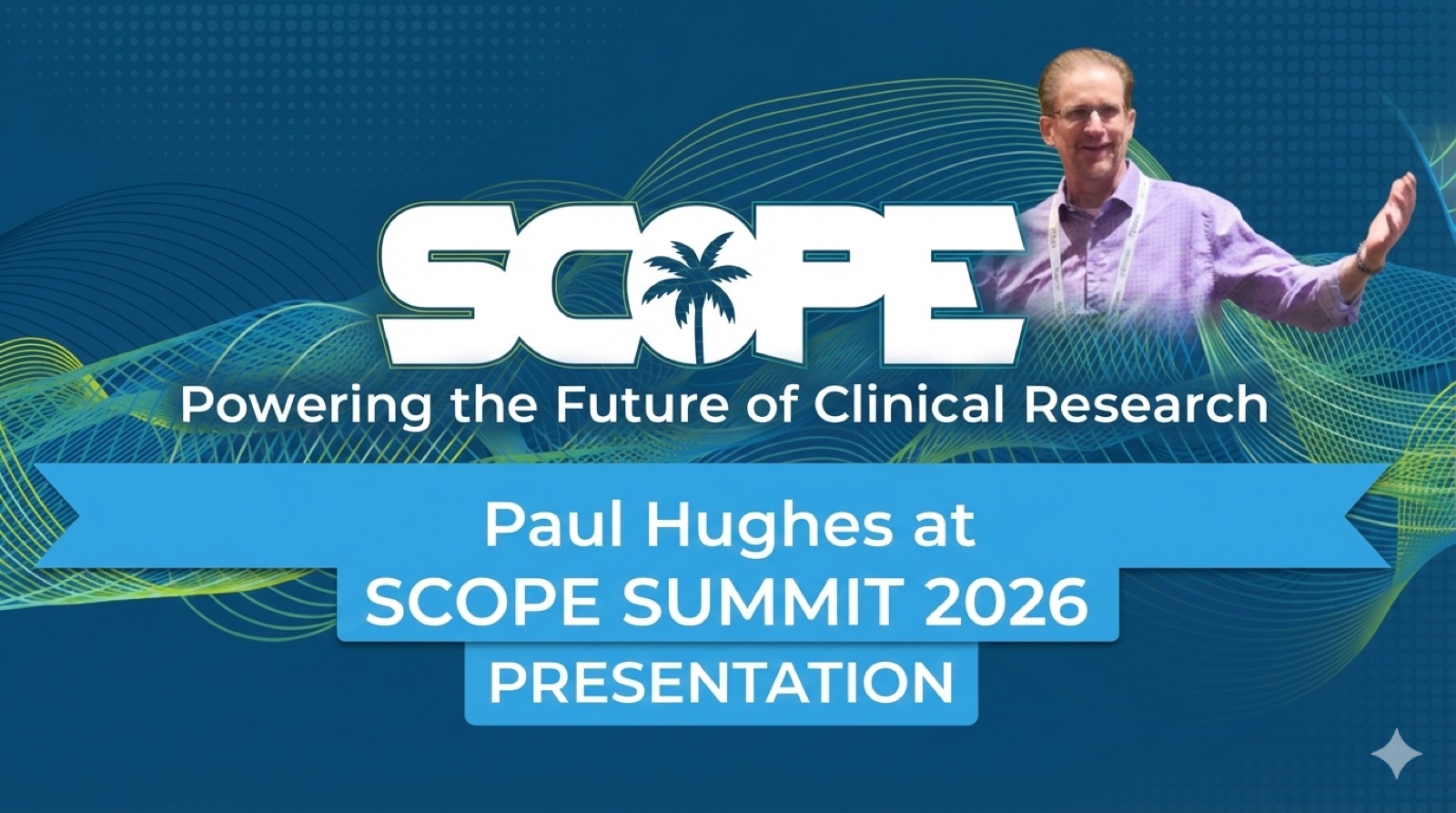
At the SCOPE 2026 Summit in Orlando, Florida, Paul Hughes delivered a presentation that stood out not for alarmism, but for optimism. In an industry where Randomization and Trial Supply Management has historically been discussed through the lens of risk avoidance, Hughes opened with a markedly different tone. “I smell optimism,” he told the audience, underscoring a belief that RTSM has reached a level of maturity that allows the industry to think beyond simply not failing.
Hughes’ talk, grounded in more than two decades of hands-on experience, focused on what it truly means to get RTSM right and, more importantly, how organizations can move from correctness to optimization by 2026. Below we will distill the core learnings from that session and frame them as practical guidance for sponsors, CROs, and technology providers navigating the next phase of clinical trial supply.
From Avoiding Failure to Delivering Value
Hughes was candid about RTSM’s past. For much of his career, success meant one thing: “I am just not going to ruin this.” Given RTSM’s central role in patient safety and trial integrity, that mindset was rational. Mistakes were catastrophic, and conservatism became ingrained in both systems and culture.
What Hughes emphasized at SCOPE 2026 is that the industry has moved beyond that phase. “It’s not just risk avoidance anymore,” he noted. Over the past decade, increased collaboration, stronger vendors, and more open dialogue across organizations have enabled RTSM teams to consistently deliver systems that function as intended. That progress, in his view, creates the foundation for something more ambitious: optimization.
Defining What RTSM Is, and What It Is Not
One of Hughes’ first principles was deceptively simple: define your RTSM system. He challenged organizations to be explicit about whether their platform is meant to be a broad, multi-purpose solution or a focused RTSM system built to excel at randomization and trial supply.
Reflecting on the industry’s legacy of “Swiss Army knife” IRT systems, Hughes was clear about his own position. “I am firmly in the camp of RTSM,” he said, arguing that specialization drives clarity, efficiency, and accountability. Regardless of philosophy, his message was consistent: the definition must be deliberate, communicated to partners and suppliers, and respected over time.
Requirements Discipline as a Non-Negotiable
A central theme of the presentation was what Hughes referred to as requirements discipline. He cautioned against building solutions in the absence of clearly defined processes and requirements, a pattern he has seen repeatedly across organizations.
Drawing on a real-world example from the COVID-19 pandemic, pharma companies were looking for ways to rapidly build direct-to-patient shipment capabilities without any articulated requirements. “What are your requirements?” he asked at the time. The answer was simply, “I don’t know. Just build something.” The conclusion in any instance like this should be direct: “You can’t build anything for which there are no requirements and processes.”
The lesson is structural, not technical. RTSM optimization requires organizations to start with process and regulatory reality, derive requirements from that foundation, and only then implement technology. When those elements do not exist, RTSM teams must resist pressure to deliver solutions prematurely and instead work backward with stakeholders to establish them.
Clarifying Ownership Through Specialization
Hughes also addressed a common inefficiency in RTSM delivery models: overlapping responsibilities. He described scenarios where sponsors, CROs, and vendors simultaneously attempt to gather requirements or make design decisions, resulting in duplication and confusion.
His recommendation was the deliberate use of task ownership matrices and role specialization. By clearly defining responsibilities through RACI models and allowing individuals to focus as testers, design leads, or project managers, organizations reduce redundancy and improve execution quality. Hughes noted that this approach has enabled his own teams to operate more efficiently and to engage vendors with clearer, more actionable inputs.
Understanding RTSM Data on Its Own Terms
Data was another area Hughes identified as a persistent source of misunderstanding. He emphasized the importance of clearly defining RTSM data as transactional rather than clinical. An RTSM timestamp reflects when a system action occurred, not when a patient received treatment. That distinction, he argued, must be understood across the organization to avoid unnecessary reconciliation and internal conflict.
“RTSM data is transactional data,” Hughes stated plainly. Clinical truth belongs in clinical data collection systems, not in RTSM. Without this shared understanding, teams expend significant effort attempting to reconcile datasets that were never meant to align at that level.
Breaking Out of Trial-Level Data Silos
Hughes went further than simply emphasizing the importance of clear data definition; he directly addressed the industry’s persistent dependence on fragmented RTSM data silos maintained on a trial-by-trial basis. This issue became particularly pronounced during the Ukraine conflict, which disrupted clinical supply chains and affected pharmaceutical companies, CROs, CMOs, and other stakeholders. When senior leadership urgently needed visibility into shipments within the affected region, the lack of centralized data access became apparent. Teams were forced to log into hundreds of individual RTSM systems to gather the required information, exposing a fundamental structural weakness in how RTSM data was being aggregated and accessed across the industry.
“We can do better,” Hughes said. His vision for RTSM optimization includes centralized, cross-study access to RTSM data, integrated with other clinical supply information. This capability is not just about crisis response; it is essential for informed decision-making at a portfolio level.
From GPS Guidance to Self-Driving RTSM
To illustrate the future of RTSM, Hughes used an analogy that resonated strongly with the audience. Today’s systems, he explained, are like early GPS tools. They show the route, but humans must interpret conditions and decide how to react. While useful, this model still depends heavily on manual intervention.
The next step is autonomy. Hughes described a future where RTSM systems respond dynamically to enrollment shifts, site inactivity, and environmental disruptions without waiting for human action. Supply levels adjust automatically, waste is reduced, and resources are allocated based on real-time conditions. In his words, the industry is moving toward “self-driving” RTSM systems.
Importantly, Hughes emphasized that the technology required to support this vision already exists. The remaining barriers are organizational trust, integration, and the discipline to define boundaries within which automation can operate safely.
Conclusion
Paul Hughes’ SCOPE 2026 presentation offered more than a vision of the future; it provided a grounded assessment of where RTSM stands today and what is required to move forward responsibly. The optimism he expressed was not aspirational rhetoric, but a reflection of hard-earned progress across the industry.
RTSM Optimization by 2026, as framed by Hughes, is not about radical reinvention. It is about clarity of purpose, disciplined execution, proper use of data, and the thoughtful application of automation. Organizations that internalize these lessons will be positioned not just to avoid failure, but to deliver measurable value through smarter clinical trial supply.